

大客流安全
一、方向简介
大客流安全研究面向车站、机场、地铁、景区、体育场馆及大型活动现场等高密度人员聚集场景,重点关注人群聚集、流动、拥堵、踩踏风险及突发事件下的安全保障问题。该方向围绕多源异构数据感知、客流状态识别、时空分布建模、异常行为检测、风险预警与应急疏导等关键环节展开,综合运用视频智能分析、物联网感知、时空大数据挖掘与人工智能预测等技术,构建从实时监测、动态研判到辅助决策的技术体系。通过研究大客流演化规律与安全风险形成机制,可为公共场所精细化管理、重大活动安保、城市运行安全和应急联动处置提供支撑,提升复杂环境下人员密集场所的风险防控能力和安全治理水平。
I. Introduction to the Direction
The large passenger flow safety research focuses on high-density personnel gathering scenarios such as stations, airports, subways, scenic areas, stadiums and large-scale event venues, with particular attention to safety assurance issues related to crowd gathering, movement, congestion, stampede risks and emergencies. This direction focuses on key aspects including multi-source heterogeneous data sensing, passenger flow state identification, spatiotemporal distribution modeling, abnormal behavior detection, risk warning and emergency evacuation, comprehensively applying technologies such as intelligent video analysis, Internet of Things sensing, spatiotemporal big data mining and artificial intelligence prediction to build a technical system covering real-time monitoring, dynamic assessment and decision-making support. By studying the evolution patterns of large passenger flows and the formation mechanisms of safety risks, it can provide support for refined management of public places, security assurance for major events, urban operational safety and emergency coordination and response, thereby improving risk prevention and control capabilities and the level of safety governance in densely populated places under complex environments.
二、核心研究内容
人群密度检测与客流统计
面向车站站厅、站台、通道、场馆出入口等高密度人群聚集区域,利用视频监控、边缘感知设备、Wi-Fi探针及物联网传感器等多源数据,开展人群密度识别、客流计数与时空分布分析研究。通过构建实时感知与动态统计模型,实现重点区域客流变化趋势监测、峰值识别及人员流动规律挖掘,为现场限流组织、设施调度和安全管理提供精准数据支撑。
II. Core Research Content
Crowd Density Detection and Passenger Flow Statistics
Focusing on high-density crowd gathering areas such as station concourses, platforms, passageways, and venue entrances and exits, research is conducted on crowd density identification, passenger flow counting, and spatiotemporal distribution analysis using multi-source data such as video surveillance, edge sensing devices, Wi-Fi probes, and Internet of Things sensors. By constructing real-time sensing and dynamic statistical models, monitoring of passenger flow change trends, peak identification, and the analysis of personnel movement patterns in key areas can be achieved, providing accurate data support for on-site crowd flow control, facility scheduling, and safety management.
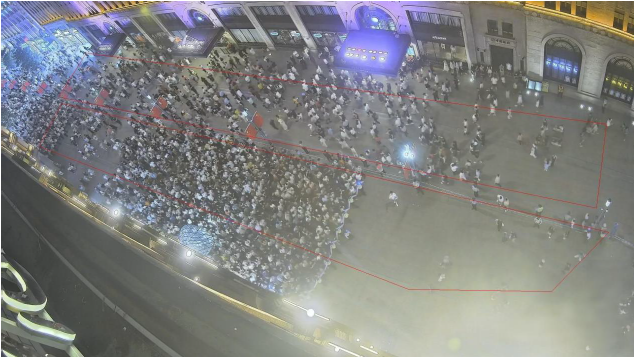
外滩区域某时刻客流状态
Passenger Flow Status in the Bund Area at a Certain Time
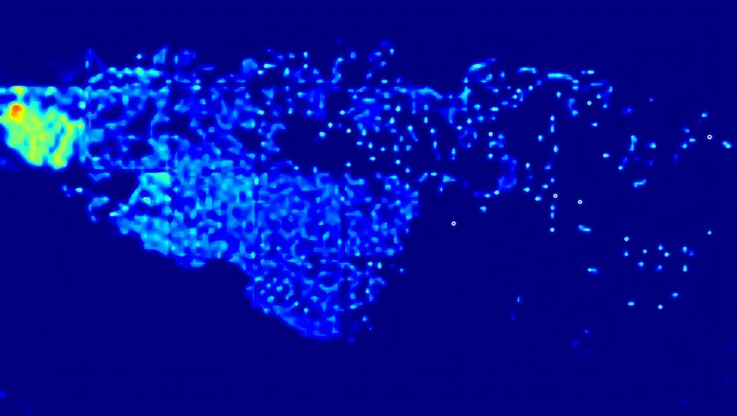
密度回归型人群计数模型所输出的密度图
Density Map Output by a Density Regression-Based Crowd Counting Model
课题组围绕复杂城市环境中的人群密度检测与客流统计问题,重点研究多源异构数据驱动的精细化感知方法。针对传统视觉计数受遮挡、视角变化影响较大的局限,构建了以深度学习为核心的摄像头密度估计模型,实现人群空间分布的连续表征;同时引入LBS定位信令数据,对区域客流规模进行宏观建模。进一步通过时空对齐、路段映射与参数标定机制,建立视觉信息与位置数据的协同融合框架,实现微路网尺度下的人群密度识别与动态客流统计,为智慧城市治理和公共安全管理提供技术支撑。
The research group focuses on crowd density detection and passenger flow statistics in complex urban environments, with an emphasis on fine-grained sensing methods driven by multi-source heterogeneous data. To address the limitations of traditional visual counting, which is significantly affected by occlusion and changes in viewing angles, a deep learning-based camera density estimation model has been developed to achieve continuous representation of the spatial distribution of crowds; meanwhile, LBS location signaling data is introduced to conduct macro-level modeling of regional passenger flow. Furthermore, through spatiotemporal alignment, road segment mapping, and parameter calibration mechanisms, a collaborative fusion framework integrating visual information and location data is established, enabling crowd density identification and dynamic passenger flow statistics at the micro-road network scale, thereby providing technical support for smart city governance and public safety management.
数字孪生与仿真推演
围绕交通枢纽、场馆园区及大型公共空间,构建物理场景与虚拟空间同步映射的数字孪生系统,实现人员分布、设施状态与运行过程的实时可视化表达。基于多智能体建模与仿真技术,开展客流组织优化、突发事件疏散推演及应急预案评估研究,提前验证不同管理策略效果,提升复杂场景下安全保障与协同指挥能力。
Digital Twin and Simulation
Focusing on transportation hubs, venue complexes, and large public spaces, digital twin systems are constructed to achieve synchronous mapping between physical scenes and virtual spaces, enabling real-time visualization of personnel distribution, facility status, and operational processes. Based on multi-agent modeling and simulation technologies, research is conducted on passenger flow organization optimization, emergency evacuation simulation, and emergency response plan evaluation, enabling the effects of different management strategies to be verified in advance and improving safety assurance and coordinated command capabilities in complex scenarios.
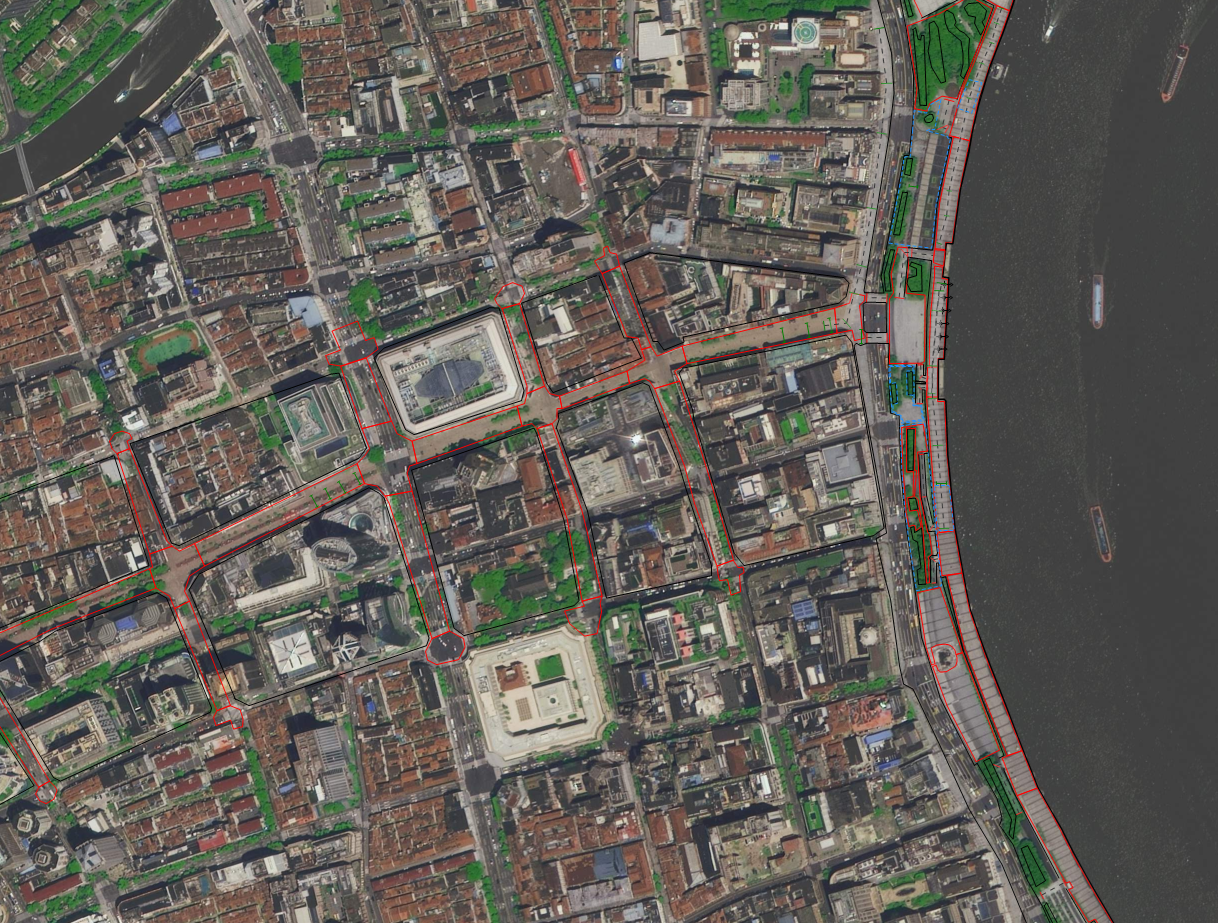
课题组构建南京东路-外滩区域大客流仿真预测智能体
The research group has developed a large passenger flow simulation and prediction agent for the Nanjing East Road–Bund area.
课题组围绕数字孪生与仿真推演方向,聚焦复杂场景下的人群动力学建模与智能安全管控,形成了"虚实映射—行为感知—态势推演"的研究体系。在行人微观行为刻画方面,团队融合多模态感知数据与语义轨迹分析技术,构建了面向恐慌情绪的实时识别模型,实现了对异常行为演化规律的精准捕捉;在仿真推演层面,建立了耦合物理接触力与情绪传播机制的人群动力学模型,突破了高密度场景下运动状态高精度还原的难题。针对交通枢纽等典型场景,团队深入探究了行人-行李耦合运动规律及扰动传播机制,为数字孪生系统的实时镜像与风险预警提供了核心理论支撑。同时,团队积极推动技术转化,将虚实融合仿真方法应用于高危作业实训与应急演练,助力安全培训模式的智能化升级。
The research group focuses on digital twins and simulation, with an emphasis on crowd dynamics modeling and intelligent safety management in complex scenarios, and has developed a research framework of “virtual-physical mapping—behavior perception—situational simulation.” In terms of microscopic pedestrian behavior characterization, the team integrates multimodal sensing data with semantic trajectory analysis technologies to develop a real-time recognition model for panic emotions, enabling the accurate capture of the evolution patterns of abnormal behavior; at the simulation level, a crowd dynamics model coupling physical contact forces and emotion propagation mechanisms has been established, overcoming the challenge of high-precision reproduction of movement states in high-density scenarios. Focusing on typical scenarios such as transportation hubs, the team has conducted in-depth research on pedestrian-luggage coupled movement patterns and disturbance propagation mechanisms, providing core theoretical support for real-time mirroring and risk warning in digital twin systems. Meanwhile, the team has actively promoted technology transfer, applying virtual-physical integrated simulation methods to high-risk operation training and emergency drills, thereby supporting the intelligent upgrading of safety training models.